
Next eventWorkshop: Compliance of AI & RoboticsNovember 25, 2026 · 2:30 to 5:00 pm · Coppenrath Innovation Centre, OsnabrückDetails →

EIRIS

The Interreg project Ecological Innovation for Resilient Integrated Systems (EIRIS) develops and validates integrated cropping systems that combine biological, mechanical and digital solutions.
Logo EIRIS

EIRIS – Ecological Innovation for Resilient Integrated Systems

Agriculture in the German-Dutch border region is to reduce the use of chemical crop protection products without jeopardizing yields, plant health or profitability. This is particularly challenging for potatoes and onions. Biological, mechanical and digital methods have often been developed separately so far, which can create new agronomic, operational or economic risks.

The Interreg project EIRIS therefore develops and validates integrated cropping systems that combine biological, mechanical and digital solutions. Dutch and German partner institutions test these combinations under real farming conditions and translate the findings into decision support tools for farmers and advisors.

The project is divided into five steps: baseline, implementation, validation, agentic AI decision support and uptake. These steps cover the following: recording the initial situation, implementing integrated systems, assessing performance, environmental impact, economic viability and feasibility, agentic AI decision support, and transfer into practice through demonstrations and a cross-border innovation platform.

The project is scheduled to run from July 1, 2026 to June 30, 2029. Planned project costs total around 5.3 million euros, of which around 2.9 million euros come from ERDF funds. The lead partner is Stichting Wetsus, European Centre of Excellence for Sustainable Water Technology. Project partners include Osnabrück University of Applied Sciences, Hagedorn Software Engineering, the 3N Competence Center Lower Saxony and the Agrotech Valley Forum.

The consortium brings together research, agricultural organizations, experimental facilities, technology companies and software specialists. Associated partners such as chambers of agriculture and advisory networks broaden the practical relevance.

Project details

07/2026–06/2029

  • Stichting Wetsus (lead partner)
  • 3N Competence Center Lower Saxony

Project partners from the network

Logo Hagedorn
Logo Hochschule Osnabrück

Contacts

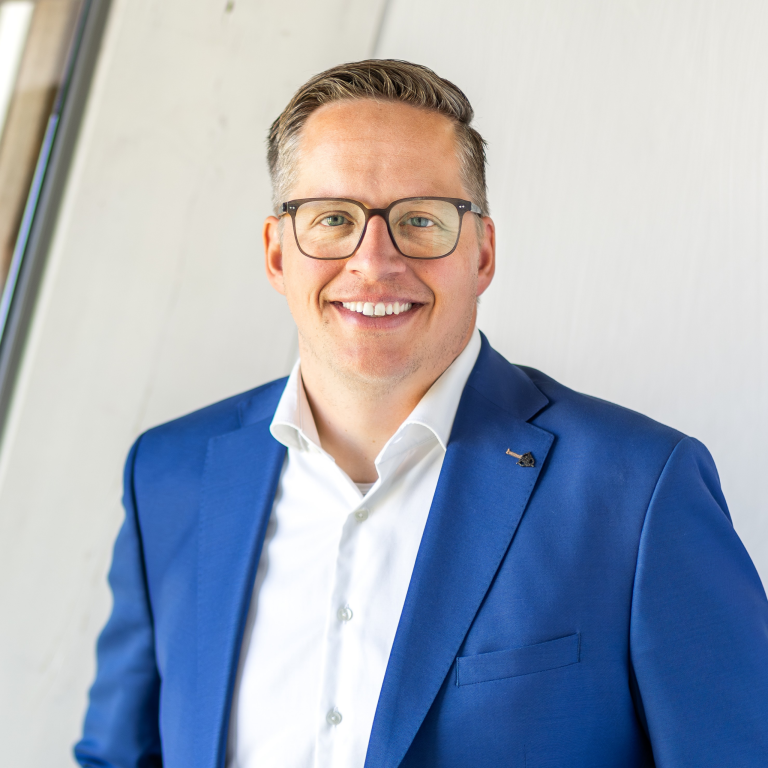
Robert Everwand

Robert Everwand

Managing Director

Events related to the project

More current projects

ZDQ-Agrar

ZDQ-Agrar strengthens the acceptance and use of digital technologies in agriculture through targeted qualification of training staff (“train-the-trainer” approach).
Learn more →

ASKLA

Application Center for Smart Connectivity in Agriculture: sector-specific connectivity solutions for agriculture are developed and tested here, from edge-to-cloud to in-field sensing, making smart connectivity tangible.
Learn more →
Logo WEcircleValley

WEcircleValley

WEcircleValley, circular economy in the bioeconomy in Weser-Ems, connects companies along the entire bioeconomy value chain in the Weser-Ems region.
Learn more →
Logo de:hub AgriFood Osnabrück/Hannover

de:hub AgriFood Osnabrück/Hannover

The Agrotech Valley Forum is part of the de:hub AgriFood Osnabrück/Hannover, one of 25 de:hubs nationwide within the de:hub digital ecosystems initiative.
Learn more →
Logo KI-Reallabor Agrar

KI-Reallabor Agrar

Lower Saxony is strong, both as a center of science and as an agricultural region. This is where the KI-Reallabor Agrar (Agricultural AI Living Lab) is being created, a pioneering research and innovation project led by Osnabrück University together with seven further partners.
Learn more →
Logo CITAH+

CITAH+

CITAH+ stands for “Cross-Industry Transformation in Agriculture, Health and Beyond”. The project aims to support small and medium-sized enterprises (SMEs), mid-caps and public institutions in their digital transformation and to strengthen their competitiveness, with a particular focus on artificial intelligence (AI) and its practical application.
Learn more →